How do brokerages recruit real estate agents?
Brokerages recruit real estate agents with a written offer: a commission plan, the costs the firm covers, and the tools and training the agent will use, followed by a license transfer that state law controls. In NAR’s 2025 Profile of Real Estate Firms, 35% of firms were actively recruiting sales agents, including 82% of firms with four or more offices, most often to grow or to add experienced agents. In NAR’s 2026 Member Profile, 28% of REALTORS had been with their current firm for a year or less.
SkySlope supplies the tools in that offer: transaction management, Forms with brokerage templates for onboarding, and Books for commission plans and payouts.

Key takeaways
- 35% of firms were actively recruiting sales agents in 2025, down from 40% in 2023; 82% of firms with four or more offices were.
- 28% of REALTORS had been at their current firm a year or less in 2026, up from 23%. The median tenure is six years.
- NAR does not ask agents why they chose a firm. It does show that E&O insurance is the benefit firms most often provide, and that 48% of agents pay for their own health insurance.
- California and Illinois require a written agreement with each agent that covers compensation; federal tax law needs one for the agent to count as self-employed.
- Registering a move: within 24 hours in Illinois and five days in California by the new broker, within 10 days in Florida by the licensee, and in TREC’s REALM Portal in Texas.
Which brokerages are recruiting, and why
Which real estate brokerages are recruiting agents?
NAR’s Profile of Real Estate Firms surveyed brokers of record in July 2025 (4,672 responses). 35% of firms were actively recruiting sales agents in 2025, down from 40% in 2023, and the share rises with size: 30% of single-office firms, 55% of firms with two offices, 60% with three and 82% with four or more.
Most firms are small: 81% have one office, typically with two full-time licensees. The firms that recruit do so for different reasons by size:
Size also shapes the worry about the next generation: 35% of firms with four or more offices named recruiting younger agents among their biggest challenges for the next two years, against 16% of single-office firms.
How often agents change firms
How often do real estate agents change brokerages?
NAR does not publish a yearly switching rate, but its 2026 Member Profile, which surveyed members about their 2025 business, measures tenure. The median REALTOR had been with their current firm for six years, and members licensed as sales agents for four. 28% had been there a year or less, up from 23% in the 2025 survey; that includes people new to the business, since 11% of members had a year or less of experience.
From the firm’s side, the typical firm with four or more offices had eight licensees join and four leave in 2024; the typical single-office firm had none of either. Why agents leave, and how to keep the ones you recruit, is in our guide to why agents leave brokerages.
New and experienced agents are different recruits. Members with two years or less in the business had a median gross income of $8,000 in 2025, against $88,500 for members with 16 years or more. Only 6% said real estate was their first career.
What agents get from a firm
What do real estate agents look for in a brokerage?
NAR’s 2026 Member Profile does not ask agents why they chose their firm, and the 2025 firms survey does not either. The data shows the relationship instead: 86% of REALTORS are independent contractors and 5% are employees, 53% are with an independent company and 41% with a franchise, and 21% work on a team. Firm-paid benefits are uncommon:
| Benefit | Provided by the firm | Agent pays out of pocket |
|---|---|---|
| Errors and omissions insurance | 44% | 40% |
| Health insurance | 4% | 48% |
| Pension, SEP or 401(k) | 4% | 38% |
| Life insurance | 3% | 39% |
| Paid vacation or sick days | 4% | 18% |
Percent of REALTORS. NAR, 2026 Member Profile, Exhibit 4-5. The rest get the benefit from a partner or family, or not at all.
Tools and training are where firms invest. The tools firms most often provide or encourage are electronic contracts and forms (73%), comparative market analysis (71%), e-signature (70%) and the MLS (65%); 36% provide or encourage transaction management. Daily use among REALTORS: MLS software 62%, electronic contracts and forms 40%, e-signature 35%, transaction management 27%. 71% of firms encourage certifications and designations, and 61% additional training classes.
Commission plans and fees
What commission plans do brokerages offer agents?
Brokerages pay agents in a handful of ways, often combined. NAR’s surveys do not measure how common each is, so none is called standard here:
| Model | How it works | What to put in writing |
|---|---|---|
| Split | Each commission is divided between agent and brokerage by a set percentage; in a tiered plan the agent’s share steps up with production. | The percentages, what counts toward each tier, when tiers reset |
| Cap | The agent pays the brokerage’s share until it reaches a set amount for the year, then keeps the full commission, apart from fees. | The cap amount, the cap year, which fees still apply |
| Flat fee | The agent keeps the commission and pays a fee per transaction, per month, or both. | Each fee, when it is charged, what it covers |
| Fees and royalties | Transaction, technology, desk or E&O fees, and franchise royalties, on top of any plan. | Who pays each, and whether it is deducted or billed |
| Team split | A team lead takes part of a member’s commission on top of the brokerage’s terms. | Who sets it; that it is paid through the broker |
California and Illinois require the plan in a written agreement with each agent, and federal tax law needs a written contract for the agent to count as self-employed; the rules are in the steps below. Running several plans side by side, with caps, fees and team splits, is the job of real estate back office software. And before a firm can sponsor anyone, its principal needs a broker license: see our guide to becoming a real estate broker.
When an agent joins: the steps the law sets
What does a broker have to do when a new agent joins?
The offer is a contract, the move is a license transfer and the first payout is a tax record. Four states show how much the timing varies.
- The offer
Put the offer in writing
California requires a dated, signed agreement covering “supervision of licensed activities, duties and compensation” (10 CCR 2726); Illinois adds the termination process (225 ILCS 454/10-20). Federal tax law treats the agent as self-employed only if pay is tied to sales, not hours, under a written contract saying they are not an employee (26 U.S.C. 3508).
- Before day one
The agent ends the old sponsorship
In Texas the agent notifies their broker in writing and ends the sponsorship through TREC, and the license becomes inactive (22 TAC 535.121). Clients stay: TREC says a buyer representation agreement belongs to the broker, not the agent.
- Day one
Register the new sponsorship
Illinois: the new broker notifies the state within 24 hours (225 ILCS 454/5-40). California: the new broker notifies the DRE within five days (10 CCR 2752), on RE 214 or eLicensing, certifying the written agreement is on file. Florida: the licensee notifies within 10 days (Fla. Stat. 475.23). Texas: request and accept it in TREC’s REALM Portal.
- Day one
No licensed work until it shows
Illinois bars practice until the new sponsorship is registered. TREC treats brokerage work on an inactive license as a violation, and a sponsorship as effective once it appears in REALM. Florida bars working for anyone not registered as the employer (475.42).
- First week
Set up the plan, forms and checklists
Enter the split, cap and fees before the first closing, and give the agent the brokerage’s forms and checklists. In Texas any commission or other valuable consideration needs the sponsoring broker’s written consent (22 TAC 535.3).
- First deals
First closing and year end
Commission is paid through the broker (Cal. B&P 10137; TREC). Each broker that paid the agent $2,000 or more in commissions during the year reports it on Form 1099-NEC, box 1a, for payments made after December 31, 2025.
Read at each source on November 3, 2026: 10 CCR 2726 and 2752; Cal. B&P 10137 and 10161.8; DRE form RE 214; Fla. Stat. 475.23 and 475.42; 225 ILCS 454/5-40 and 10-20; 22 TAC 535.3 and 535.121; TREC (April 21, 2026); 26 U.S.C. 3508; IRS 1099-NEC instructions (Rev. 12/2026). Other states set their own steps.
Paying for referrals and recruiting
Can a brokerage pay someone for recruiting agents?
Recruiting bonuses or revenue share paid to licensed agents run through the broker. In Texas a sales agent may not receive “a commission or other valuable consideration” without the written consent of their sponsoring broker, or of the broker who sponsored them when they earned it (22 TAC 535.3). In California a salesperson may pay another licensee for licensed work only through their own broker (B&P 10137).
Payments to unlicensed people are narrower:
- Florida disciplines a licensee who pays an unlicensed person “for the referral of real estate business, clients, prospects, or customers” (Fla. Stat. 475.25(1)(h)).
- California bars a broker from paying an unlicensed person “for performing any of the acts within the scope of this chapter” (B&P 10137).
- Illinois bars compensation to an unlicensed person “in exchange for the person performing licensed activities” (225 ILCS 454/10-15).
- Texas lets an unlicensed person share in a brokerage’s income only if they do nothing that requires a license and do not lead the public to think they are in the brokerage business (22 TAC 535.147).
These rules are written around client referrals and licensed work, and none names agent recruiting. Before paying an unlicensed recruiter, or a former agent whose license has lapsed, have counsel read your state’s rule.
RESPA Section 8 enters when a lender or title company helps pay. It bars any “fee, kickback, or thing of value” given under an agreement to refer settlement service business on a federally related mortgage loan; payments under “cooperative brokerage and referral arrangements or agreements between real estate agents and brokers” are exempt (12 U.S.C. 2607).
Recruiting ads
Do real estate advertising rules apply to recruiting ads?
None of the state rules read for this guide has a separate section for recruiting ads, and most are written with consumers in mind:
- Texas defines an advertisement as communication “designed to attract the public to use real estate brokerage services,” social media and text included, and requires the broker’s name in at least half the size of the largest agent or team contact information (22 TAC 535.155).
- California requires the licensee’s name, license number and responsible broker on materials “intended to be the first point of contact with consumers” (B&P 10140.6).
- Illinois bars any advertising, social media included, that is “fraudulent, deceptive, inherently misleading, or proven to be misleading in practice” (225 ILCS 454/10-30).
A recruiting ad on a job board or social media reaches the public too, so hold it to the same standard: the brokerage’s licensed name, and split, cap and fee claims that match the agreement the agent will sign.
What to measure
How do you measure a real estate recruiting program?
Track recruiting like a sales pipeline, from first conversation to first closing, and compare each measure with your own prior year rather than an industry benchmark:
| Measure | How to calculate it | Data from |
|---|---|---|
| Source | Where each candidate first heard of the firm: an agent referral, an event, an ad, a class | CRM or recruiting software |
| Stage conversion | Share moving from first conversation to meeting, offer, signed agreement and registered license | CRM or recruiting software |
| Cost per hire | Recruiting spend (ads, events, recruiter pay, signing incentives) divided by agents who joined | Accounting |
| Time to first closing | Days from the registered sponsorship to the first closed file | Transaction management |
| First-year production | Sides, volume and company dollar in the first 12 months, against what the offer assumed | Back office |
| Net change | Agents who joined minus agents who left, by office | Your roster |
NAR’s medians are context, not targets: the typical firm with four or more offices added eight licensees in 2024 and lost four.
Recruiting and onboarding in SkySlope
The tools a recruit will use every day are part of the offer, and 34% of firms count keeping up with technology among their biggest challenges. SkySlope covers three of them, in SkySlope’s own words:
- Transactions and compliance. SkySlope lets brokers “monitor your transactions in real time from a single dashboard,” with custom checklists “to help your agents keep track of the documents they need to submit,” Quick Audit for file review, and a mobile app.
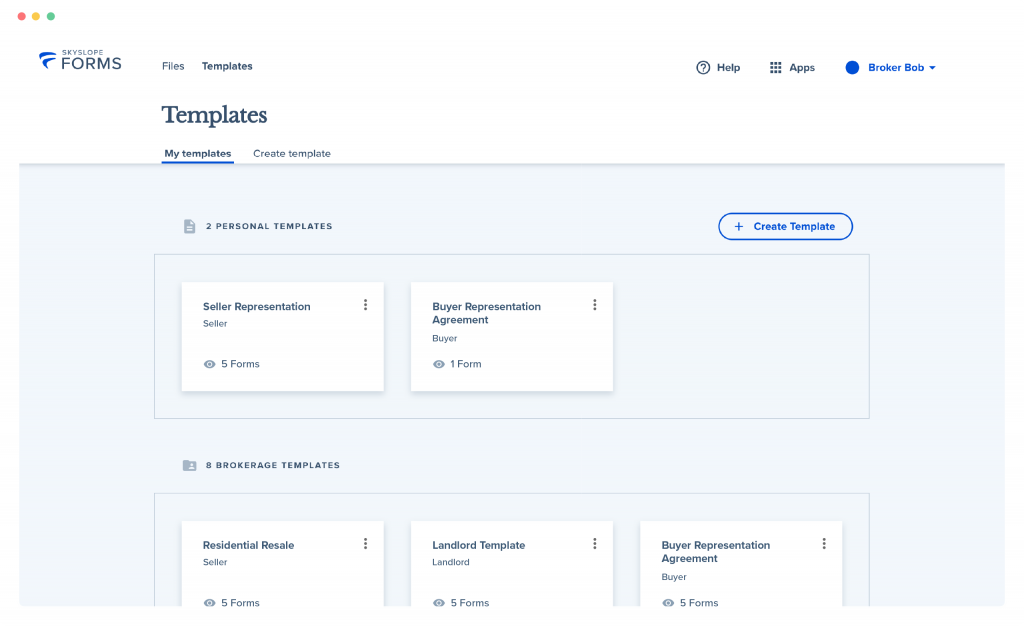
- Forms and onboarding. SkySlope Forms fills contracts from MLS data, and Broker Libraries keep the brokerage’s forms “pre-loaded, ready to go, and always up-to-date.” With Forms Broker Edition, broker templates “make onboarding new agents easier.”
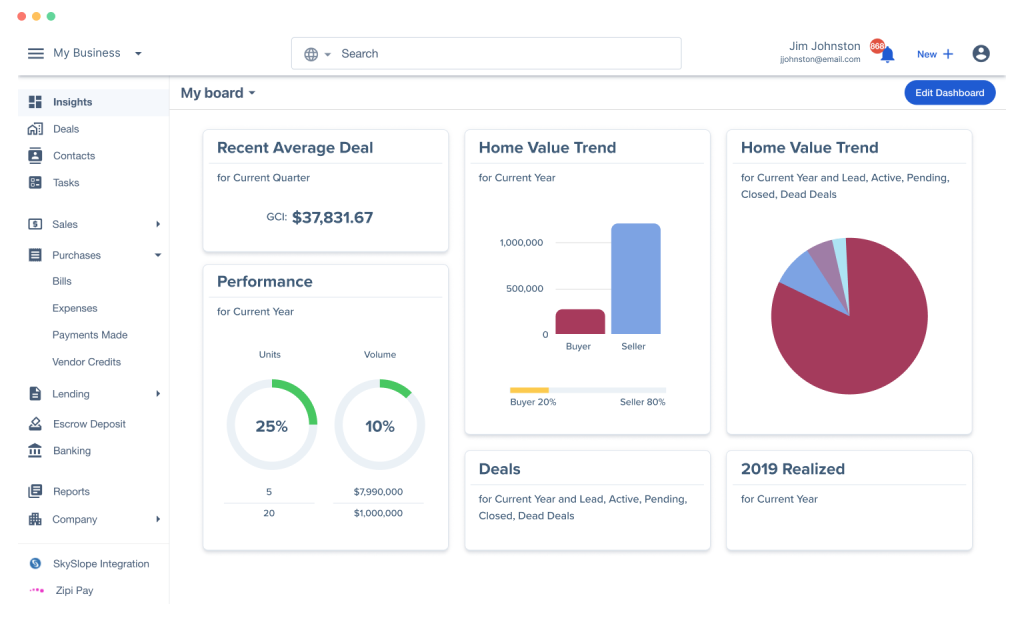
- Commission plans and payouts. SkySlope Books applies “fees, royalties, and tiered commission splits” with customizable calculation formulas, runs recurring fees and automatic invoices, shows how close each agent is to their cap in a Cap Report, and pays commissions by next-day transfer. Its dashboards “measure agent, team or office performance,” and it produces 1099 reports.
FAQ
How do brokerages recruit real estate agents?
With a written offer: a commission plan, the costs the firm covers, and the tools and training agents get, followed by a license transfer under state law. In NAR’s 2025 Profile of Real Estate Firms, 35% of firms were actively recruiting sales agents, including 82% of firms with four or more offices, most often to grow (79%) or to add experienced agents (52%).
How often do real estate agents change brokerages?
NAR does not publish a yearly switching rate. In its 2026 Member Profile the median REALTOR had been with their current firm for six years, and sales agents for four. 28% had been there a year or less, up from 23%; that includes new licensees, since 11% of members had a year or less in the business.
What happens to an agent’s license when they move to a new broker?
In Texas and Illinois the license goes inactive when the old sponsorship ends, and Illinois bars practice until a new sponsorship is registered. In Florida the license “shall cease to be in force” on a change of employer, with notice due within 10 days. In California the new broker notifies the Department of Real Estate within five days.
Can a brokerage pay an unlicensed person a referral fee?
Not for referring clients or doing licensed work. Florida disciplines payments to unlicensed people “for the referral of real estate business, clients, prospects, or customers,” and California and Illinois bar paying them for licensed activity. None of these rules names agent recruiting, so have counsel read your state’s rule before paying an unlicensed recruiter.
Do agents take their clients when they change brokerages?
Not automatically. The Texas Real Estate Commission says a buyer representation agreement is “a private contract between the buyer and the real estate broker, not the sales agent,” so the buyer stays with the previous broker unless released. Pay for a deal earned at the old firm needs the written consent of the broker who sponsored the agent when it was earned.
What should a broker and agent agreement include?
California requires a dated, signed agreement covering supervision, duties and compensation, and Illinois adds the termination process. For federal tax, an agent is self-employed only under a written contract saying so, with pay tied to sales rather than hours. The split, any cap and every fee belong in it too.
See the tools in your offer to agents, from the first file to the first payout.
Request a demo →Sources
- NAR, 2026 Member Profile (full report; copy hosted by bnar.org). www.bnar.org/downloads/NARmemberprofile2026.pdf
- NAR, 2025 Profile of Real Estate Firms. cms.nar.realtor/sites/default/files/2025-11/2025-profile-of-real-estate-firms-11-19-2025.pdf
- 26 U.S. Code 3508, qualified real estate agents. www.law.cornell.edu/uscode/text/26/3508
- IRS, Statutory nonemployees. www.irs.gov/businesses/small-businesses-self-employed/statutory-nonemployees
- IRS, Instructions for Forms 1099-MISC and 1099-NEC (Rev. 12/2026). www.irs.gov/instructions/i1099mec
- 12 U.S. Code 2607, RESPA Section 8. www.govinfo.gov/content/pkg/USCODE-2024-title12/html/USCODE-2024-title12-chap27-sec2607.htm
- TREC rules, 22 TAC 535.3. www.law.cornell.edu/regulations/texas/22-Tex-Admin-Code-SS-535-3
- TREC rules, 22 TAC 535.121. www.law.cornell.edu/regulations/texas/22-Tex-Admin-Code-SS-535-121
- TREC rules, 22 TAC 535.147. www.law.cornell.edu/regulations/texas/22-Tex-Admin-Code-SS-535-147
- TREC rules, 22 TAC 535.155. www.law.cornell.edu/regulations/texas/22-Tex-Admin-Code-SS-535-155
- TREC, How to change and accept sponsorship requests (April 21, 2026). www.trec.texas.gov/article/how-change-and-accept-sponsorship-requests
- TREC FAQ, changing brokers and buyer representation agreements. www.trec.texas.gov/i%E2%80%99m-changing-sponsoring-brokers-can-i-take-buyers-i-represent-me-new-broker-if-buyers-signed-buyer
- TREC FAQ, unlicensed people sharing in brokerage income. www.trec.texas.gov/can-unlicensed-person-own-real-estate-company-and-receive-all-or-portion-commission-paid-licensed
- California Business and Professions Code 10137. leginfo.legislature.ca.gov/faces/codes_displaySection.xhtml?lawCode=BPC§ionNum=10137
- California Business and Professions Code 10140.6. leginfo.legislature.ca.gov/faces/codes_displaySection.xhtml?lawCode=BPC§ionNum=10140.6
- California Business and Professions Code 10161.8. leginfo.legislature.ca.gov/faces/codes_displaySection.xhtml?lawCode=BPC§ionNum=10161.8
- California Code of Regulations, title 10, section 2726. www.law.cornell.edu/regulations/california/10-CCR-2726
- California Code of Regulations, title 10, section 2752. www.law.cornell.edu/regulations/california/10-CCR-2752
- California DRE, Salesperson Change Application, RE 214 (Rev. 5/25). dre.ca.gov/files/pdf/forms/re214.pdf
- Florida Statutes chapter 475 (475.23, 475.25, 475.42). www.leg.state.fl.us/statutes/index.cfm?App_mode=Display_Statute&URL=0400-0499/0475/0475.html
- Illinois Real Estate License Act of 2000, 225 ILCS 454. www.ilga.gov/legislation/ILCS/details?ActID=1364&ChapterID=24&ChapAct=FullText
- SkySlope, transaction management. skyslope.com/products-services/skyslope/
- SkySlope Forms. skyslope.com/products-services/forms/
- SkySlope Forms Broker Edition. skyslope.com/broker-edition/
- SkySlope Books. skyslope.com/products-services/books/

